
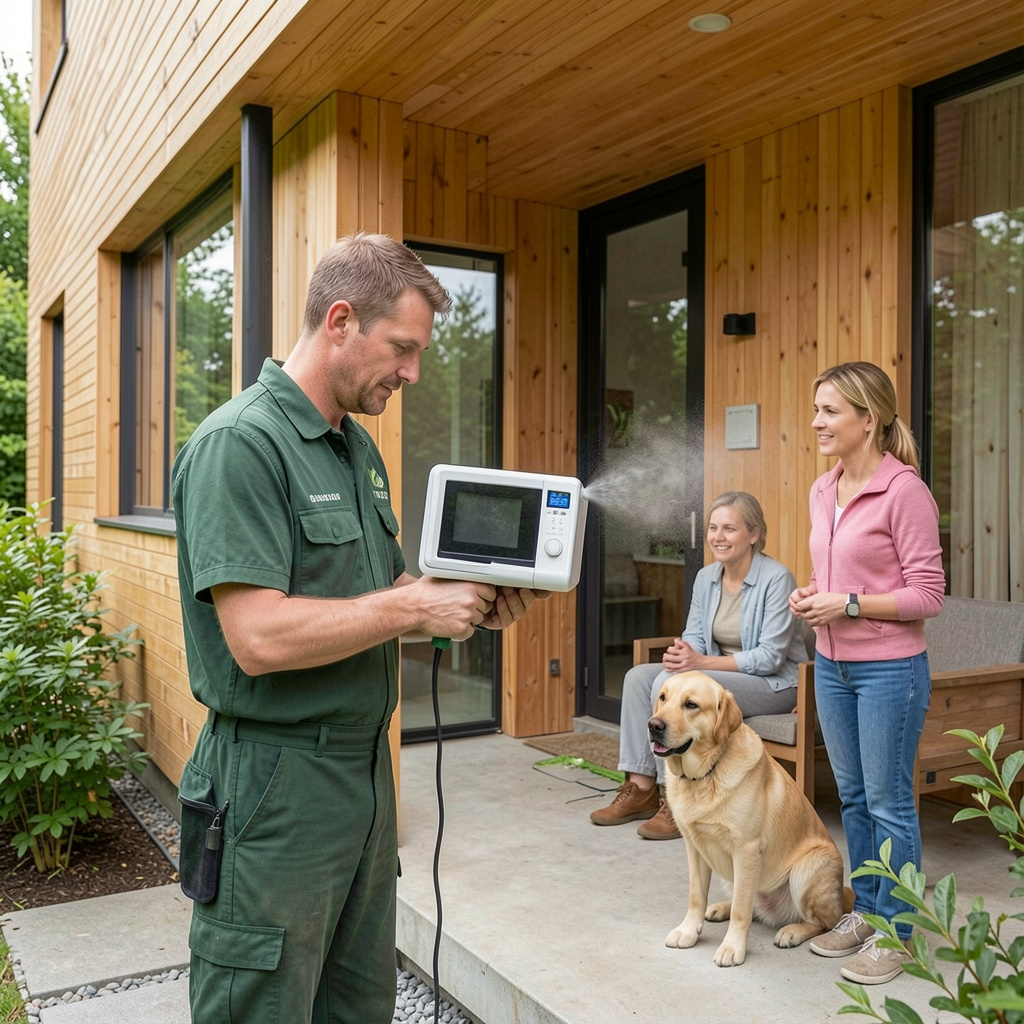
As more homeowners and businesses prioritize sustainability, choosing an eco-conscious pest control provider has become an important part of responsible property maintenance. Whether you’re dealing with woodworm, termites, rodents, or other household pests, the right company should not only eliminate the problem but also minimize its impact on your family, your property, and the environment.
Modern pest control has evolved far beyond routine pesticide applications. Many professional companies now offer environmentally responsible solutions such as Integrated Pest Management (IPM), targeted treatments, moisture management, and innovative technologies like microwave woodworm treatment, which uses controlled heat instead of chemical insecticides.
In this guide, you’ll learn how to identify an environmentally responsible pest control provider, what questions to ask before hiring one, and why sustainable pest management is becoming the preferred approach for homeowners around the world.Visit online https://www.shashel.eu for more details .
What Is an Eco-Conscious Pest Control Provider?
An eco-conscious pest control provider focuses on managing pests while reducing unnecessary environmental impact.
Rather than relying solely on chemical pesticides, these companies emphasize:
- Prevention
- Early detection
- Targeted treatments
- Responsible pesticide use
- Sustainable maintenance practices
- Long-term pest prevention
Their goal is to solve pest problems effectively while protecting people, pets, wildlife, and the surrounding environment.
Why Choosing the Right Provider Matters
The quality of pest control depends not only on the treatment itself but also on the knowledge and experience of the professionals carrying it out.
A reputable provider can help you:
- Identify the true cause of the infestation.
- Avoid unnecessary chemical applications.
- Protect valuable timber and furniture.
- Reduce the likelihood of future infestations.
- Save money through preventive maintenance.
Choosing the right company can make a significant difference in both treatment results and long-term property care.
1. Look for a Focus on Integrated Pest Management (IPM)
One of the strongest indicators of an environmentally responsible company is its commitment to Integrated Pest Management (IPM).
IPM combines:
- Routine inspections
- Pest monitoring
- Accurate pest identification
- Moisture management
- Physical exclusion methods
- Targeted treatments only when necessary
Instead of automatically applying pesticides, IPM addresses the root causes of infestations.
2. Ask About Chemical-Free Treatment Options
A good provider should explain all suitable treatment options—not just chemical ones.
For woodworm infestations, ask whether they offer alternatives such as:
- Microwave woodworm treatment
- Heat-based treatment methods
- Preventive timber maintenance
- Moisture control recommendations
Having multiple treatment options allows you to choose the solution that best matches your priorities.
3. Check Professional Qualifications
Always verify that the company employs trained and qualified technicians.
Look for:
- Appropriate licensing (where required)
- Industry certifications
- Ongoing professional training
- Experience with your specific pest problem
Qualified professionals are better equipped to recommend effective and environmentally responsible treatments.
4. Ask About Inspection Procedures
Responsible pest control starts with a thorough inspection.
A professional assessment should include:
- Identifying the pest species.
- Locating affected areas.
- Assessing structural damage.
- Investigating moisture problems.
- Recommending the most suitable treatment.
Be cautious of companies that recommend treatment without first inspecting the property.
5. Choose Companies That Prioritize Prevention
The best pest control providers don’t simply eliminate existing pests—they help prevent future infestations.
Preventive recommendations may include:
- Improving ventilation
- Repairing leaks
- Reducing indoor humidity
- Sealing entry points
- Maintaining timber properly
Long-term prevention is one of the key principles of sustainable pest management.
6. Ask About Environmental Policies
An eco-conscious company should be able to explain how it minimizes environmental impact.
Questions you can ask include:
- Do you use targeted treatments instead of routine blanket spraying?
- Do you offer chemical-free solutions where appropriate?
- How do you reduce unnecessary pesticide use?
- What measures do you take to protect the surrounding environment?
Transparent answers demonstrate a genuine commitment to sustainability.
7. Look for Experience with Heritage and Timber Preservation
If your property contains valuable wooden structures or antique furniture, choose a provider with experience in timber preservation.
Specialist companies may offer solutions for:
- Historic buildings
- Listed properties
- Museums
- Churches
- Antique furniture
- Timber-framed homes
These projects often require careful treatment planning to preserve original materials.
8. Read Customer Reviews
Reviews can provide valuable insight into:
- Professionalism
- Communication
- Reliability
- Treatment effectiveness
- Customer satisfaction
Look for consistent feedback from verified customers rather than relying on a single review.
9. Request a Clear Treatment Plan
A reputable provider should explain:
- The identified pest.
- Why the infestation occurred.
- Recommended treatment options.
- Expected outcomes.
- Preventive measures after treatment.
Clear communication helps you make informed decisions.
10. Compare More Than Just Price
The cheapest quote is not always the best value.
When comparing companies, consider:
- Experience
- Qualifications
- Treatment methods
- Environmental practices
- Customer support
- Long-term prevention
A higher-quality service may reduce future repair costs by addressing the root causes of infestations.
Why Microwave Woodworm Treatment Is Popular
Many eco-conscious pest control companies now offer microwave woodworm treatment as an alternative to traditional chemical applications.
Professional microwave equipment generates controlled heat inside timber through dielectric heating, eliminating:
- Woodworm larvae
- Beetle eggs
- Pupae
- Adult wood-boring beetles
Benefits
- Chemical-free
- No pesticide residues
- Targeted treatment
- Environmentally friendly
- Suitable for heritage buildings
- Helps preserve original timber
Eco-Conscious Pest Control vs. Traditional Pest Control
| Feature | Eco-Conscious Pest Control | Traditional Pest Control |
|---|---|---|
| Focus | Prevention and targeted management | Pest elimination |
| Chemical Use | Minimized where appropriate | Often relies more on pesticides |
| Environmental Impact | Lower | Moderate |
| Integrated Pest Management | Common | Varies |
| Chemical-Free Options | Often available | May be limited |
Both approaches have value, and the most appropriate choice depends on the property and the nature of the infestation.
Common Mistakes to Avoid
When choosing a pest control company, avoid:
- Hiring based solely on the lowest price.
- Accepting treatment without an inspection.
- Ignoring moisture or structural issues.
- Overlooking qualifications and certifications.
- Assuming all infestations require chemical treatment.
Taking time to evaluate providers carefully often leads to better long-term results.
Questions to Ask Before Hiring
Consider asking:
- What treatment options do you recommend?
- Do you offer chemical-free methods?
- Will you inspect the property before treatment?
- How will you help prevent future infestations?
- What experience do you have with timber preservation?
- Do you provide a written treatment plan?
These questions can help you compare providers more effectively.
Long-Term Sustainable Pest Prevention
After treatment, continue protecting your property by:
- Inspecting timber regularly.
- Repairing leaks promptly.
- Maintaining good ventilation.
- Reducing indoor humidity.
- Keeping wooden structures dry.
- Monitoring for early signs of pests.
- Scheduling periodic professional inspections.
Preventive maintenance remains the most sustainable form of pest control.
Conclusion
Choosing an eco-conscious pest control provider is about more than eliminating pests—it’s about protecting your home, preserving valuable materials, and reducing environmental impact. Companies that emphasize Integrated Pest Management, thorough inspections, preventive maintenance, and chemical-free solutions such as microwave woodworm treatment can often provide effective results while supporting long-term sustainability.
Before hiring a provider, take the time to evaluate their qualifications, treatment methods, environmental practices, and commitment to prevention. A knowledgeable and responsible professional can help you solve today’s pest problem while reducing the likelihood of future infestations. By making informed choices, you not only protect your property but also contribute to healthier, more sustainable pest management practices.